PRICE
$1,950
SCHEDULE
Alpine Climbing 5 Day*
July 23 – July 27, 2027 (Fri-Tue) – 3+ spots left
August 20 – August 24, 2027 (Fri-Tue) – 3+ spots left
BOOK THIS TRIP »
* All dates available unless indicated as sold out.
JOIN WAITLIST »
DETAILS
Grade: Intermediate
5 Day Course
Talk to an ADVENTURE expert
425.749.7421
OVERVIEW
New for 2027
Our North Cascades Alpine Climbing Course is our premier introduction to the essentials of modern alpinism. This course takes you from a scenic rock climbing crag high above the lush Puget Sound to some of the most famous glaciated peaks in North Cascades National Park. Along the way, our professional guides will give you a comprehensive introduction to mountain skills, including multipitch rock climbing, glacier travel, crevasse rescue, snow camping and many more topics and techniques.
The Alpine Climbing Course combines our popular Glacier Mountaineering and Alpine Rock-Climbing courses into a single curriculum and includes a summit ascent on Mount Shuksan or Sharkfin Tower in Boston Basin, depending on seasonal conditions. This itinerary is perfect for anyone who wants to climb classic routes in the North Cascades and aspires to move safely and proficiently through the world’s great mountain ranges.
Alpine Climbing • 5 Day Course
Our adventure begins on the diorite cliffs of Mount Erie, near the picturesque town of Anacortes, Washington. We devote the first day of the course to rock climbing. While ascending single- and multipitch traditional routes, we practice moving on rock, belaying, rappelling, rope management and other skills.
Having learned rock climbing fundamentals, we drive to the Shannon Ridge Trailhead in the heart of North Cascades National Park and hike to our high camp at the toe of the Sulphide Glacier or into Boston Basin, two of the most famous alpine camps in the Cascades. On days 2 through 5, we learn to live and climb in glaciated terrain. We practice ice and crampon technique, rope team travel, self-arrest, crevasse rescue, snow camping, snow and ice anchors, glacier navigation and more.
Mount Erie • Rock Climbing
Located about 1.5 hours north of Seattle on Fidalgo Island near the charming city of Anacortes, Mount Erie is home to an excellent range of single- and multipitch rock climbing routes. Over a full day, our professional guides will help you review and expand your rock climbing skill set. As we prepare for our ascents of Mount Shuksan or Sharkfin Tower, we focus on a variety of techniques essential for safe and efficient travel on alpine rock, including protection, anchors, rope management, movement skills, belaying, lowering, rappelling and more.
Mount Shuksan • 9,131 feet
Known as the “Crown Jewel of the North Cascades,” Mount Shuksan is one of the most beautiful mountains in the United States. Our guided climbs on this iconic peak are simply unforgettable. Our high camp occupies a natural amphitheater near the toe of the Sulphide Glacier, surrounded by views of the North Cascades. At sunrise, morning light illuminates the jagged, icy peaks of Mount Baker just to the west. Mount Shuksan offers a variety of glacier and alpine rock terrain to fit any skill level making it an ideal venue to learn and progress.
Classic Alpine Routes
Sharkfin Tower • 8,160 feet
Shaped like its namesake, Sharkfin Tower rises above Boston Basin in a chain of famous peaks that includes Mount Torment, Forbidden Peak, Boston Peak and Sahale Mountain. Known for high-quality granite, panoramic views, and relatively easy access, Sharkfin Tower is an excellent classroom for alpine rock climbing. The Southeast Ridge combines glacier travel, steep snow and moderate rock, allowing climbers to practice many of the skills of a well-rounded alpinist.
Sahale Mountain Traverse • 8,680 feet
Sahale Mountain (also known as Sahale Peak) is one of the popular summits in the Cascade Range. Set at the head of the impressive Stehekin Valley, Sahale’s rocky summit pinnacle is flanked on the west by the Quien Sabe Glacier and on the south by the Sahale Glacier. Our traverse takes us up the more challenging Quien Sabe Route, across the summit, and down the classic Sahale Arm Route via the Sahale Glacier to our trailhead at Cascade Pass. Throughout the traverse, we often see mountain goats and we enjoy stunning views of the jagged heart of North Cascades National Park.
Alpine Climbing School Curriculum
Alpine Rock Climbing Curriculum:
- Movement on rock
- Climbing equipment & clothing
- Climbing knots & hitches
- Traditional multipitch climbing
- Belaying, lowering & rappelling
- Introduction to anchors and protection
- Using a guidebook and trip planning
- Climbing communication
Glacier Mountaineering Curriculum:
- Rest step, step kick, pressure breathing
- Ice axe technique & self-arrest
- Crampon technique
- Glacier travel, climbing as a rope team
- Introduction to snow & ice anchors
- Crevasse rescue & self-extrication
- Leave No Trace skills
- Ascent of Mount Shuksan
- Discussion topics will include: Clothing and equipment, packing a backpack, mountain weather, glaciology, acclimatization, route finding, snow camp skills.
Climbing Routes
Sulphide Glacier Approach
- Approach Time to Camp: 5-6 hours
- Distance: 5 miles, 4,000 ft. gain
- Trailhead: Shannon Ridge, 2500 ft.
- High Camp: 6500 ft.
- Camp to Summit: 4-5 hours, 2700 ft. gain
- Trail synopsis: We hike the Shannon Ridge trail (an old logging road) northeast for 2 miles to its terminus at about 4,000 feet, then ascend switchbacks through old growth forest to a flat area on the ridge itself. We follow the ridge north for 1 mile until it flattens out at about 4,600 feet and enters North Cascades National Park. We then hike uphill to the crest of the pass and traverse steep sloping mountainside with large boulders to 5,400 feet. Our high camp is located another 1,000 feet higher at 6,500 feet, among permanent snowfields at the glacier’s edge.
Boston Basin Approach
- Approach Time to Camp: 3-4 hours
- Distance: 3-4 miles, 2100 ft. gain
- Trailhead: Boston Basin Climbers Path, 3200 ft.
- Low Camp: 5300 ft.
- High Camp: 6400 ft.
- Quien Sabe Glacier Camp: 7500 ft.
- Trail synopsis: From Cascade River Road, we follow an abandoned road for one mile to an old mine site, then continue up a climbers’ path across four stream crossings until we emerge above tree line at 5,300 feet into Boston Basin. We choose between a variety of campsites in the basin below 6,400 feet.
Sharkfin Tower Southeast Ridge
- Total Elevation Gain: 2000 feet
- Quien Sabe Glacier Camp to Summit Roundtrip: 2 miles, 7+ hours
- Time on Route: 4-5 hours
- Pack Weight: 15-25 lbs.
- Route Synopsis: From our high camp on the Quien Sabe Glacier, we ascend a 4th class rock gully and snow slopes to a notch at the base of Sharkfin Tower. Several pitches of 5.0-5.6 climbing on solid rock take us directly up the spine of the ridge in a superb position high above the massive Boston Glacier. We then traverse the crest of the tower for two more pitches to the summit, where we enjoy panoramic views of Forbidden Peak, Eldorado Peak, Johannesburg Mountain, Glacier Peak, Mount Rainier and many other summits. We rappel and downclimb our route back to high camp.
Need help choosing a trip?
Read our Four-Legged Stool blog post for tips on finding the right adventure for you.
Related courses: 3 Day Mount Baker Intro to Mountaineering, 5 Day Mount Baker Glacier Mountaineering, 6 Day Mount Baker Expedition Training, 5 Day North Cascades Alpine Climbing, 2 Day Crevasse Rescue, 2 Day Intro to Ice Climbing
Related ski courses: 3 Day Intro to Backcountry Ski Touring, 5 Day Mount Baker Ski Glacier Mountaineering
Course Highlights
- 1 full day of alpine rock climbing instruction
- 2 full days of glacier mountaineering instruction
- 1 ascent of a classic Cascades peaks
- 3 nights in tented alpine camps
- Crevasse rescue instruction
- Belaying, rappelling and anchor instruction
- Small teams for a personalized experience
- Access to our convenient BaseCamp and The Guide Hut in Sedro-Woolley, WA.
- An enjoyable Northwest Alpine Guides adventure in the heart of North Cascades National Park
Day to Day Itinerary
Day 1 • Rock Climbing Instruction
Day 2 • Hike to High Camp
Day 3 • Glacier Mountaineering School
Day 4 • Crevasse Rescue Instruction
Day 5 • Summit Climb
Qualifications
This is an intermediate level course and climb suitable for climbers in excellent physical condition with previous outdoor experience, solid backpacking skills and some prior rock climbing experience. No prior glacier experience is necessary. Five full days of mountaineering and rock climbing instruction are included in the program. No extra acclimatization is necessary for this program. Read our Goals and Fitness page for recommendations on how to best physically prepare for this adventure.
3 to 1 Climber to Guide Ratio
We lead the North Cascades Alpine Climbing Course at a 3 to 1 climber to guide ratio to ensure that you receive personal attention and hands-on instruction throughout the course.

Northwest Alpine Guides is an authorized outfitter guide service within North Cascades National Park

ITINERARY
North Cascades Alpine Climbing
Plan to arrive the day before the course begins.
Day 1 • Knots and Movement Skills • Traditional Multipitch Climbing
Northwest Alpine Guides will provide you with a detailed PreClimb departure book upon registration including personal gear list, meeting location and driving directions.
Our alpine guides will meet you for team introductions, gear check, and group gear distribution. The drive to the trailhead at Mount Erie takes approximately 30 minutes.
After a short approach hike to the crag, we will cover equipment selection, knots, belaying, rappelling, and practice some movement skills by climbing some shorter pitches. Your guides will host discussions on climbing topics throughout the course.
After lunch we embark on a traditional multipitch route, allowing us to practice route-finding, anchors, protection, rope and team management and movement skills on a longer climb.
Depending on climber ability, we may choose any one of a number of routes, from October Sky (5.6, 2 pitches) to Gotta Keep Dancing (5.9, 4 pitches).
Accommodations: Overnight in Sedro-Woolley (not included)
Meals Included: None
Day 2 • Hike to High Camp
We meet in the morning and drive approximately one hour to Shannon Ridge Trailhead.
The hike to high camp takes 4 to 5 hours. The team will set camp between 5,000 and 6,500 feet depending on the season.
In the evening, we are free to relax and watch the alpenglow on the spectacular scenery of the North Cascades, ringed by glaciated peaks including Mount Baker, Eldorado Peak, and Glacier Peak.
Each team member will be assessed throughout the approach hike and mountaineering instruction. You will need to demonstrate adequate fitness as your safety is our priority.
Vertical gain hiking: 4,000 feet
Hiking time: 4 to 5 hours
Accommodations: Tented Camp
Meals Included: None
Day 3 • Glacier Mountaineering School
Today we hike onto the Sulphide Glacier and spend the day learning glacier climbing fundamentals. Instruction includes ice axe and crampon technique, self-arrest training, rope team travel, and snow anchors. Depending on time and conditions, we may take the opportunity to practice these skills by moving to a higher camp where we’ll conduct crevasse rescue instruction the next day.
Vertical Gain Hiking: 1,000 feet
Training Time: 7-8 hours
Accommodations: Tented Camp
Meals Included: None
Day 4 • Crevasse Rescue
Today we continue to develop our skills, practicing advanced glacier climbing techniques needed for expedition mountaineering. Instruction will include snow protection, crevasse rescue, ascending fixed lines, belaying, rappelling and rope management. Introduction to ice climbing is dependent on conditions in the field and is typically possible for late season courses.
After mountaineering training, we return to camp and prepare for our summit bid. The team enjoys dinner and early to bed for the next day’s climb.
Vertical Gain Hiking: 1,000 feet
Training & Hiking Time: 7-8 hours
Accommodations: Tented Camp
Meals Included: None
Day 5 • Summit Day via Sulphide Glacier • 9,131 feet
Our summit day begins early with a pre-dawn alpine start. From high camp, we ascend the moderate Sulphide Glacier to the base of the summit pyramid which we ascend via a 3rd class scramble up the central gully, or 5th class rock climbing on the pyramid’s Southeast Ridge. After enoying the summit views and celebrating our success, we rappel off the summit pyramid and descend to high camp.
We then break camp, pack our gear, and retrace our hike back to the trailhead. We generally arrive back to the trailhead by early afternoon and conclude our adventure in Sedro-Woolley.
Vertical gain climbing: 2,600 feet
Climbing time: 5 to 7 hours
Vertical descent hiking: 4,000 feet
Hiking time: 2 to 3 hours
Accommodations: Tented Camp
Meals Included: None
Plan to depart the day after the course ends.
Itinerary Notes
Northwest Alpine Guides makes every effort to uphold the scheduled itinerary, although our guides are given discretion to adapt the itinerary for reasons beyond our control or due to the needs of the group. Meal schedule: (B) Breakfast (L) Lunch (D) Dinner
DETAILS
Where to Meet
At 8:00 a.m. on the morning of the climb, we meet at BaseCamp in Sedro-Woolley, WA for equipment check and orientation before heading to the trailhead. We will email you detailed PreClimb information including a gear list and full departure details upon receiving your registration.
Deposit and Payments
- A non-refundable deposit of $300 per person secures your reservation.
- The balance is due 120 days prior to start date.
- The balance can be paid by credit card with a surcharge of 3.0%, or Zelle payment network.
- If your balance payment is not received 120 days before the start of your program, your reservation will be canceled, and all program fees forfeited.
Price Includes
- Guided climb and instruction
- Professional mountain guide
- Group equipment (including tents, ropes, etc.)
- Wilderness Permits
Price Does Not Include
- Transportation
- Meals and snack food
- Personal gear
- Hotels or lodging
- Trip cancellation insurance
- Medical and evacuation coverage
- Staff gratuities
Guides
Our instructors are highly skilled professional guides who have been selected based on their technical proficiency, proven safety records, careful judgment, patience, and supportive teaching styles. They are dedicated to a climbing lifestyle, and collectively have climbed throughout the earth’s major mountain ranges. Our guides are friendly, very willing to share their own experiences, and can help you develop a plan to achieve your own climbing ambitions. All our guides carry current certification in wilderness first aid.
Tipping
Our guides are dedicated mountain professionals who work hard to ensure your success and wellbeing on the mountain. If you have a positive experience, gratuities are an excellent way to show your appreciation. An average tip is 10 – 20% percent of the cost of the program, usually $100 – $200. Your guide team will pool all tips.
Summit Attempt
Northwest Alpine Guides cannot guarantee that you will reach the summit. Weather, route conditions, your own abilities, or the abilities of other climbers may create circumstances that make an ascent unsafe. You or your entire party may have to turn around without reaching the summit. Failure to reach the summit due to a team member’s own lack of fitness or to any of the events associated with mountaineering (such as weather, route, avalanche hazard, team dynamics, etc.), are not NWAG responsibility and will not result in refund or reschedule.
Age Guidelines
Participants age 16 & 17: May participate in fixed-date group itineraries if accompanied by a parent or legal guardian.
Participants age 15: May only participate in private climbs and must be accompanied by a parent or legal guardian.
We do not accept participants under 15 years old due to insurance and liability reasons.
Minimum Participants
Please note that a minimum of two participants is required to guarantee each departure at the advertised price.
Travel Insurance
We highly recommend that all participants consider travel and trip cancellation insurance after making a deposit. Travel insurance offers the best protection in the event of a sudden, unexpected illness, an injury prior to or while traveling, or a possible family emergency.
If you choose not to purchase insurance, you assume full responsibility for any expenses incurred in the event of a medical emergency and/or evacuation, as well as for trip cancellation, interruption, lost luggage, etc. Northwest Alpine Guides does not insure you against these risks. We ask that you consult your travel insurance carrier directly with questions.
For more info about current coverage plans and quotes please visit.

Ripcord Rescue Travel Insurance
Travel, evacuation and rescue coverage designed for adventure travelers.
For a quote, or to purchase travel insurance, please click this link Ripcord Rescue Travel Insurance™
- Waiver for pre-existing conditions (must be purchased within 14 days of trip deposit)
- Optional “Cancel for Any Reason” coverage (must be purchased within 14 days of trip deposit)
Global Rescue

We recommend Signature Travel Insurance. For travel insurance or Global Rescue membership.
For a quote, or to purchase travel insurance, please click this link Global Rescue
For Non-US Residents & Citizens – World Nomads
For Canadians and for other non-US residents (enter your country of origin), World Nomads can provide travel and disaster insurance options for mountaineers.
Date Changes
Date changes may be requested at any time up to 60 days prior to your departure date for a $100.00 fee per person. Date changes are subject to availability and apply only to the current climbing season. No date changes allowed less than 60 days before departure.
Cancellations
Since departures require a minimum number of participants, Northwest Alpine Guides must adhere to a stringent refund policy. The policy is intended to protect participants who have otherwise committed time and resources to the departure. Please read our Terms and Conditions.
MEALS
You will need to bring your own stove and gas, and prepare all of your own meals during the North Cascades Alpine Climbing Course. You will need four (4) breakfasts, enough lunch and snack food for five (5) days, and four (4) dinners. As part of the curriculum, Northwest Alpine Guides will teach you to use your stove and cook meals in the backcountry. Video Resource: Mountain Snack and Lunch Ideas
Meal Schedule
Day 1: Lunch & snacks for alpine rock school
8-hour training includes a 30-minute lunch break, two 15-minute snack breaks (about 150-200 calories each break).
Day 2: Lunch & snacks for hike from trailhead to high camp, Dinner
Three or four 15-minute lunch & snack breaks (about 150-200 calories each break) during the hike to high camp. Dinner in camp.
Day 3: Breakfast, Lunch & snacks for mountaineering school, Dinner
8-hour training includes a 30-minute lunch break, two 15-minute snack breaks (about 150-200 calories each break). Dinner in camp.
Day 4: Breakfast, Lunch & snacks for mountaineering school, Dinner
8-hour training includes a 30-minute lunch break, two 15-minute snack breaks (about 150-200 calories each break). Dinner in camp.
Day 5: Alpine Breakfast, Lunch & snacks for climb to summit and descent
Four 15-minute snack breaks on the ascent from high camp to summit, two or three 15-minute snack breaks on the descent from summit to camp (about 150-200 calories each break).
Day 5: Remaining snacks for the descent to trailhead
Mountain Lunches
We recommend that you bring a variety of snack food to eat while moving (about 150-200 calories each break). On each day, we will encourage you to eat at regular, short maintenance breaks, roughly once every hour. These snacks can be critical for maintaining a steady supply of energy while moving up and down the mountain. We will not stop for a big lunch break.
Some examples of snack foods include dried meats (salami), jerky (turkey, beef, fish), tuna fish, cheese, crackers, bagels, dried fruit, nuts, chocolate, candy bars, gummy candy, cookies, energy bars and trail mix.
We cannot overstate how critical it is for you to bring foods that you enjoy eating. Eating properly is the key to maintaining strength in the mountains. We recommend a selection of sweet, sour and salty food.
When preparing lunches, please do not bring food items that require cooking or extensive preparation.
Mountain Breakfasts and Dinners
Please prepare your meals prior to your climb. Suggested food items:
Alpine Breakfast: Instant oatmeal, Pop Tarts, dried fruit, granola bars, bagels, peanut butter, cream cheese.
Dinner: Freeze-dried dinners are easy to prepare but do not always taste good and may affect your stomach. Instant noodle soups and rice are also popular. You may also consider bringing a cold meal of dried meat, bread, pizza, or sandwiches.
Hot Drinks: Coffee, Caffeinated Tea, Herbal Tea, Cocoa, Cider
Cold water for drinking and cooking will be available in high camp. You will be responsible for boiling water for your meal preparation, for example for freeze-dried dinners, instant soups, instant oatmeal and hot drinks.
When preparing meals, please do not bring food items that require extensive cooking or other preparation.
The Guide Hut offers a wide variety of freeze-dried meals for purchase, including vegan and gluten free options.
TRAVEL
Getting There
At 8:00 a.m. on the morning of the climb, we meet at BaseCamp in Sedro-Woolley, WA for equipment check and orientation before heading to the trailhead. Upon receiving your registration, Northwest Alpine Guides will email you complete PreClimb information, including a gear list specific to your itinerary and other departure details. The Guide Hut offers a selection of mountaineering equipment and clothing for purchase and rent.
The small town of Sedro-Woolley, “The Gateway to the North Cascades,” is approximately 70 miles and a 1.5-hour drive from Seattle or Bellevue. Limited services are available in Sedro-Woolley. More extensive food, shopping and lodging options may be found nearby in the cities of Mount Vernon and Burlington.
Northwest Alpine Guides | BaseCamp | The Guide Hut
305 F And S Grade Road
Sedro-Woolley, WA 98284
Click here for directions
Additional parking can be found across the street in the Park & Ride lot.
Welcome to BaseCamp and The Guide Hut
What to Expect the Morning of the Climb
Northwest Alpine Guides is excited to announce the opening of BaseCamp, our new meeting location and seasonal guide office in Sedro-Woolley, Washington, the Gateway to the North Cascades!
The Guide Hut serves as our rental shop and retail store for guests of Northwest Alpine Guides. Find a variety of retail items, logo wear, and climbing equipment. Visit our online gear shop for available merchandise and rental gear options.
At BaseCamp:
- Guests may pick up pre-reserved rentals, try on rental boots, and shop for last-minute items.
- Gear Check: There is ample time to pick up items during the gear check the morning of the climb.
BaseCamp exclusively serves Northwest Alpine Guides customers. It is not open to the public and operates only during scheduled hours.
Flight Travel
Most climbers will fly into Seattle-Tacoma International Airport (SEA) the evening before the program and rent a car for the hour and forty-five minute drive to Sedro Woolley, Washington. Please note that Seattle traffic is worsening and driving times from Seattle and Seattle-Tacoma International Airport may be significantly longer.
Our Northwest programs begin at the date, time and meeting location listed in the itinerary in your PreClimb Information. Meeting locations may vary depending on program destination. Climbers flying to Washington State must arrive the day before their program begins in order to meet the group for an early morning gear check and orientation. Return times on the final day of the program are difficult to predict. We strongly recommend that climbers book a hotel night following the final day of their itinerary and schedule departure flights on the following day. If departing on the last day of the program, we recommend booking a flight later than 10 pm.
Transportation
Transportation between the meeting location and the trailhead is not included in the price of the trip. Guides are not responsible for providing transportation to team members. We serve both local and out-of-town climbers in our Northwest programs, and many of our guests prefer to use their own vehicles. Team members are free to organize rideshares with other team members during gear check. The NWAG office does not coordinate ridesharing or carpooling and we are unable to share customer or guide contact information due to privacy concerns.
Trailhead Parking
You will need to obtain a NW Forest Pass or equivalent parking permit to leave your car at the trailhead lot. Single-use passes are $5.00 per day. They can be purchased in advance or the day of the gear check. A National Parks pass may suffice.
Driving Directions
From Seattle
Take I-5 North towards Burlington to Cook Road in Skagit County.
Take exit 232 from I-5 N
Turn right onto Cook Road, Head East to Sedro-Woolley
Follow Cook Road to Borseth Road in Sedro-Woolley, 7 min (4.3 mi)
At the traffic circle, take the 3rd exit and onto Borseth Road
Turn left onto F & S Grade Road
BaseCamp / Northwest Alpine Guides is the first building on your left
From Bellingham
Take I-5 South towards Burlington to Cook Road in Skagit County.
Take exit 232 from I-5 S
Turn left onto Cook Road, Head East to Sedro-Woolley
Follow Cook Road to Borseth Road in Sedro-Woolley, 7 min (4.3 mi)
At the traffic circle, take the 3rd exit and onto Borseth Road
Turn left onto F & S Grade Road
BaseCamp / Northwest Alpine Guides is the first building on your left
Hotels
Lodging in Sedro-Woolley and Burlington, Washington. If you wish to stay close to the meeting location the night before your climb, we recommend the following options:
The Kulshan Hotel
807 Trail Road
Sedro-Woolley, WA 98284
Fairfield Inn & Suites by Marriott Burlington
9384 Old Hwy 99 North
Burlington, WA 98233
La Quinta Inn & Suites by Wyndham Burlington
1670 S Burlington Blvd
Burlington, WA 98233
GEAR LIST
These items are required for our North Cascades Alpine Climbing course.
Discover premium retail and rental equipment at The Guide Hut’s online store. Order today, and your gear will be ready for pickup at BaseCamp on the morning of your climb. Don’t miss our Guide Picks blog for brand-specific gear recommendations. Gear up with us for your next adventure!
Head and Face
- Warm Hat: Wool or synthetic. Must cover the ears.
- Buff
- Sun Hat or Baseball Cap
- Glacier Glasses: Essential eye protection at altitude. Wrap around style or side shields. A category 4 lens is required.
- Sunscreen: SPF 30+
- Lip Balm: SPF 30+
- Climbing LED Headlamp: Bring one extra set of batteries.
Upper Body
- Baselayer Tops: Two synthetic long-sleeve shirts. Hoods for sun protection are strongly recommended.
- Mid-layer Top: A synthetic or fleece top.
- Softshell Jacket: This is a breathable but wind-and-weather resistant jacket. Hoods are highly recommended.
- Hardshell Jacket: A fully waterproof shell. GORE-TEX© or equivalent. Hoods are required.
- Insulated Jacket: Medium weight down. 700+ fill or higher required.
- Check out our video resource on Down Jackets for more.
Note: Proper hardshell rain gear is required on all trips.
Note: Women may want to bring an extra sports bra in case one becomes wet.
Handwear
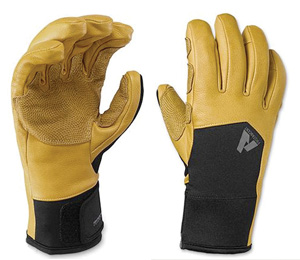
- Lightweight Softshell Gloves: One pair. Leather palms offer durability and grip.
- Heavyweight Gloves: Insulated glove or mitten with GORE-TEX© waterproof outer or DWR treatment.
Lower Body
- Baselayer Bottom: One pair. Synthetic, no cotton.
- Softshell Pants: One pair. Synthetic, stretchy, non-insulated.
- Hardshell Pants: One pair of GORE-TEX© pants. Full-length side zips are required; you may need to take off your hardshell pants without removing your boots.
- Gaiters: Full-sized waterproof gaiters that must fit snugly over your mountaineering boots.
Footwear
- Rock Climbing Shoes: Velcro, lace-up, or slipper-style rock climbing shoes with sticky-rubber soles. A snug but not painful fit is recommended.
- Mountaineering Boots: Full shank crampon compatible leather, synthetic, or hybrid boot depending on the season.
Note: Please read our Mountaineering Boots and Crampons guides for recommendations.
● Heavyweight insulated leather/synthetic/hybrid mountaineering boots are required for early season and late-summer climbs. Also recommended for mid-summer climbs.
● Single-weight synthetic/leather mountaineering boots are adequate for mid-summer climbs on Mount Baker when conditions are expected to be dry.
X – NO backpacking or trekking boots are allowed above high camp on any trip. Climbing boots must be full shank and crampon compatible.
- Approach Shoes (Optional): Light hiking boots or sturdy trail running shoes may be adequate for late-season approaches to high camp after trails are free of snow. Must be sturdy enough to support your ankles while carrying a carrying a 45- to 55- pound pack.
- Mediumweight Socks: Two pair of wool or synthetic socks.
- Heavyweight Socks: One pair of wool or synthetic socks for sleeping in and for summit day.
Sleeping
- Sleeping Bag: A warm bag rated 0ᵒ to 20ᵒ Fahrenheit depending on season.
- Sleeping Pad: A full-length closed-cell foam and/or inflatable pad. Foam AND inflatable pads are recommended for camping on snow during early-season climbs.
- Check out our video resource on Sleep Systems for more.
Cooking
- Personal Stove System: MSR WindBurner – 1.0 Liter. Or similar.
- Fuel Canister: (2) MSR IsoPro 8 oz.
Packing and Backpack
- Backpack: One 65- to 75-liter pack for personal and group gear. Should have an effective waist belt, fit properly and provide good support while carrying 45+ pounds.
- Liner Bags: 1 large plastic contractor bag.
- Check out our video resource on Packing a Mountaineering Backpack for more.
Note: An adequate size backpack is required. You are responsible for carrying all your personal gear and food, as well as a portion of group gear (tents, ropes, etc.). We do not recommend an additional pack for summit day. Backpacks smaller than 65 liters are not acceptable.
Climbing Gear
- Ice Axe: 55-75 cm mountaineering axe.
- Crampons: 12-point steel with anti-balling plates.
- Climbing Helmet: Lightweight
- Climbing Harness: Padded rock climbing harness. Adjustable leg loops are recommended.
- Trekking Poles: Adjustable and collapsible with snow baskets.
- Locking Carabiners: (2) Large pear-shaped, screw gate locking carabiners.
- Locking Carabiners: (2) Medium pear-shaped, screw gate locking carabiners.
- Non-Locking Carabiners: (4) Wire gate non-locking carabiners.
- Belay Device: Tube style belay device.
- Rescue Pulley
- Prussik Cord: 6 mm, 30 feet
- Nylon Slings: (1) 60 cm nylon sling, (1) 120 cm nylon sling
- Petzl Micro Traxion or Nano Traxion pulley, recommended
- Petzl Tibloc, optional
Hydration
- Water Bottles: (2) 1-liter, wide-mouth plastic bottles. NALGENE©
Note: CamelBaks and other bladder-style hydration systems may be used in addition to two water bottles, but are not sufficient. Bladders may pop and hydration hoses freeze in the cold.
Personal Health and First Aid
- Small personal first-aid kit with medications and blister kit
- Plastic bowl, insulated mug, and spoon
- Crystal iodine, chlorine dioxide, or equivalent chemical water treatment
- Bear resistant container or sack
- Toilet paper
- Blue bag or wag bag
- Earplugs
- Camera
- Pee Funnel (for Women), optional
- Hand Sanitizer
- Personal Items
Note: Pack basic medical supplies in a compact package. We recommend basic painkillers, Moleskin, first-aid or athletic tape, Band-Aids, and anti-septic wipes or gel.
Note: All solid waste must be carried out of the backcountry. One waste kit per 1-3 days is typically sufficient.




FITNESS
Physical fitness is the foundation of every mountain adventure. A strong cardiovascular system, endurance, core strength, flexibility and balance let us safely enjoy the spectacular terrain and close camaraderie we find in the planet’s highest places.
Mountaineering and rock climbing are strenuous activities that impose unique demands on our bodies. For rock climbing, hand and arm strength are important, but our feet usually bear most of our weight. Good footwork is essential. To move lightly and gracefully on the rock, you should develop a base of general fitness, balance and agility. Aerobic sports such as running, cycling and swimming will keep you trim, while activities like yoga can improve your core strength and flexibility. Climbing gyms are an excellent place to build climbing strength. For glacier mountaineering, the best training is hiking uphill with a heavy pack. Even strong runners may struggle to carry a heavy pack over steep, uneven terrain for hours at a time. Do not underestimate the importance of climbing-specific training.
The following fitness guidelines will help you prepare for your climb. For your safety and the safety of your rope team, you must be able to maintain the pace set by our guides while maintaining reserves of strength. Moving more slowly can be dangerous. As the climbing day lengthens, we become fatigued and dehydrated. We lose precious daylight hours and we expose ourselves to quickly shifting mountain conditions and weather.
Fitness Benchmarks
To safely enjoy this course, you must be able to meet these benchmark times while maintaining reserves of strength. Our guides may turn around climbers who are unable to do so. We recommend training for the North Cascades Alpine Climbing Course at least 3-6 months in advance.
- You should be able to hike/climb for 1 to 2 hours at a time, punctuated by 10 minute breaks, for up to 12 hours.
- You should be able to rock climb 1,000 feet per day while carrying 15-25 pounds on your back, and 4,000 feet per day while carrying 45 pounds or more on your back.
Mount Shuksan: Sulphide Glacier Route
The Sulphide Glacier Route demands approximately 6,700 feet of elevation gain from trailhead to summit. This climb includes 600 vertical feet of rock 3rd or 5th class rock-climbing to the summit. Participants should prepare for a 10- to 12-hour summit day requiring aerobic endurance, and some upper body fitness.
Shannon Ridge Trailhead to High Camp:
- Distance: 5 miles
- Ascent: 4,000 feet
- Pack Weight: 45+ pounds
- Time: 5-6 hours
Summit to Shannon Ridge Roundtrip:
- Distance: 10 miles
- Ascent: 2,700 feet
- Descent: 6,700 feet
- Pack Weight: 45+ pounds
- Time: 10-12 hours
Sharkfin Tower: Southeast Ridge
The Southeast Ridge demands approximately 700 feet of elevation gain from camp on the Quien Sabe Glacier to the summit, including 600 vertical feet of 4th and 5th class rock climbing. Participants should prepare for a 10- to 12-hour summit day requiring aerobic endurance and some upper body fitness.
Cascade Pass Trailhead to Boston Basin High Camp:
- Distance: 3 miles
- Ascent: 2,100 feet
- Pack Weight: 45+ pounds
- Time: 3-4 hours
High Camp to Quien Sabe Glacier Camp:
- Distance: 1 mile
- Ascent: 1,300 feet
- Pack Weight: 45+ pounds
- Time: 1-2 hours
Summit to Cascade Pass Trailhead Roundtrip:
- Distance: 4 miles
- Ascent: 700 feet
- Descent: 3,400 feet
- Pack Weight 45+
- Time: 10-12 hours
Sahale Mountain: Traverse
Traversing Sahale Mountain from the Quien Sabe Glacier, over the summit and down the Sahale Glacier to Cascade Pass Trailhead demands approximately 1,200 feet of elevation gain from trailhead to summit, including a short pitch of rock scrambling. Participants should prepare for 12-hour summit day requiring aerobic endurance, and some upper body fitness.
Quien Sabe Glacier Camp to Summit:
- Distance: 2 miles
- Ascent: 1,200 feet
- Pack Weight: 45+ pounds
- Time: 2-3 hours
Summit to Cascade Pass Trailhead:
- Distance: 8 miles
- Descent: 5,100 feet
- Pack Weight: 45+ pounds
- Time: 4-6 hours
Training Resources:
Please read our Goals & Fitness guide for strategies to help you train for your climb.
Many climbers, particularly those who are new to the sport, will benefit from a workout plan designed to prepare you for the rigors of mountaineering. We recommend the following training resources:
Frequently Asked Questions
What is included in the Alpine Climbing Course?
On our 5 Day North Cascades Alpine Climbing Course we will introduce a broad range of essential knowledge and techniques you need stay safe and have fun while climbing glaciers and alpine rock. You will receive a full day of dedicated rock-climbing instruction and two full days of glacier mountaineering instruction. We also climb a classic alpine rock and glacier route in the heart of North Cascades National Park: Mount Shuksan.
Your trip fee includes a professional mountain guide, wilderness camping permits, and all group expedition gear (ropes, protection and mountaineering tents). The fee does not cover travel to Mount Erie or Shannon Ridge Trailhead, lodging on days 1 or 5; snacks, meals or personal gear.
How much climbing experience do I need for this trip?
This is an intermediate level course and climb suitable for climbers in excellent physical condition with no prior mountaineering experience. We recommend that you gain some rock-climbing experience before the course, either outdoors or in a rock gym. You must have some basic movement skill to participate in the rock-climbing curriculum and climb Mount Shuksan . If you’ve never rock climbed, we recommend our 3-Day Intro to Alpine Rock Climbing.
What about safety?
Whether you’ve already done some alpinism and you are eager to expand your mountain skill set, or you’ve never stepped onto a glacier, our professional instructors are prepared to meet you at your skill level and teach you the techniques you’ll need to stay safe in the vertical world. In mountaineering, safety is paramount. Our instruction in designed to help you build your skills from the ground up.
All of our professional guides are dedicated climbers with wilderness medical certifications. We follow a well-rounded curriculum to help you become self-reliant in the mountains. Climbing can be unpredictable – weather conditions can change in a moment and bad decisions can lead to injury. Northwest Alpine Guides will teach you how to climb safely and successfully.
Why Northwest Alpine Guides
Mountain climbing blends physical and mental challenge with teamwork and unparalleled opportunities to immerse yourself in the natural world. Our group sizes are often smaller than those of other guide services, allowing us to provide our customers with rewarding, personalized adventures that make the most of all the mountains have to offer.
Our mountain guides have decades of experience and have climbed the peaks of the Northwest hundreds of times. They have completed many expeditions to the world’s most challenging summits, including Island Peak, Mount Kilimanjaro and Cotopaxi. Our guides are knowledgeable and personable. Northwest Alpine Guides will ensure you enjoy your climbing experience as you advance your skills. To learn more about our services, history and philosophy please visit: Why Northwest Alpine Guides.
General FAQ’s
Click to read general Frequently Asked Questions